In the rigorous environments of food processing, beverage bottling, and pharmaceutical manufacturing, automation equipment faces an existential threat not from mechanical overload, but from the daily cleaning cycle. To eliminate pathogens like Listeria and Salmonella, facilities utilize aggressive Clean-In-Place (CIP) and Washdown-In-Place (WIP) protocols. These protocols blast machinery with caustic chemicals, acidic foamers, and 80°C (176°F) water at pressures up to 1,450 psi (100 bar).
For the planetary gear motors driving conveyors, meat slicers, dosing pumps, and automated guided vehicles (AGVs) in these facilities, a standard industrial housing is entirely insufficient. A single ingress event can destroy the motor winding, while a leaking gearbox can contaminate an entire production batch, leading to costly recalls and irreversible brand damage.
As the industry shifts toward higher mechatronic integration and rigorous hygienic standards, procurement teams and design engineers face a significant challenge. The market is flooded with standard planetary gear motors that have been coated in white epoxy and optimistically labeled as "washdown ready" or "IP69K."
This comprehensive guide provides a granular blueprint for OEM buyers and engineers to look beyond the marketing gloss. We will dissect what a genuine hygienic planetary gear motor requires, how to audit supplier Bills of Materials (BOMs), and how to navigate the complex trade-offs between thermal performance, food-grade lubrication, and total cost of ownership (TCO).
Scope, date, and limits: This guide was published and reviewed on July 22, 2026 for global OEM procurement and engineering teams specifying planetary gear motors in food, beverage, and pharmaceutical washdown automation. It helps define RFQ evidence, supplier questions, and design trade-offs; it does not replace a certified hygienic-design assessment, local regulatory review, or third-party IP69K/IPx9K laboratory test report for the exact motor, cable, seal, lubricant, and duty cycle you intend to buy.
1. Deconstructing the IP69K Standard: What It Actually Means
When sourcing planetary gear motors, the ingress protection (IP) rating is the first filter. However, there is a dangerous misconception among buyers that the IP scale is strictly linear—meaning that an IP68 motor is intrinsically capable of handling everything an IP67 motor can, plus more, and IP69K is just the next step up.
This is structurally false.
IP67 and IP68 refer to static submersion in water. An IP68 planetary gear motor can sit at the bottom of a tank of cool water for an extended period without leaking. However, if you hit that same IP68 seal with a high-pressure, high-temperature jet of water, it will likely fail immediately.
IP69K / IPx9K (ISO 20653, often mapped to general IEC/DIN EN 60529 ingress-protection language in procurement documents) is a completely different testing parameter. It specifically certifies protection against high-pressure, high-temperature washdowns. To achieve IP69K-class protection, a gear motor must withstand:
- Water temperature around 80°C (176°F).
- Water pressure of 80 to 100 bar (1,160 to 1,450 psi).
- Flow rate of 14 to 16 liters per minute.
- Sprays from four specific angles (0°, 30°, 60°, and 90°) at a distance of just 100 to 150 mm.
For a planetary gearbox—which relies on a rotating output shaft—maintaining a dynamic seal under this kind of assault is an extreme engineering challenge. It requires highly specific fluoropolymer or specialized elastomer lip seals, backed by precisely machined shaft surfaces.
If a supplier offers an IP69K motor but cannot produce the third-party laboratory test report detailing these exact testing conditions, you are likely looking at a standard motor with a cosmetic upgrade.
2. The Anatomy of a Genuine Hygienic Planetary Gear Motor
True washdown motors are designed from the ground up for hygienic environments. You cannot simply bolt an O-ring onto a standard aluminum extrusion and call it a day.
Visualizing the Hygienic Design Architecture
316L Stainless Steel Housing
Aluminum housings, even those that are hard-anodized or painted, will eventually succumb to the extreme pH swings of caustic foaming agents (alkaline) and sanitizers (acidic, often chlorine or peracetic acid-based). Once the paint chips, aluminum oxidizes rapidly, creating a breeding ground for bacteria. Genuine hygienic motors utilize 316L stainless steel, which contains molybdenum to resist chloride-induced pitting corrosion.
Smooth Topography & Zero Crevices
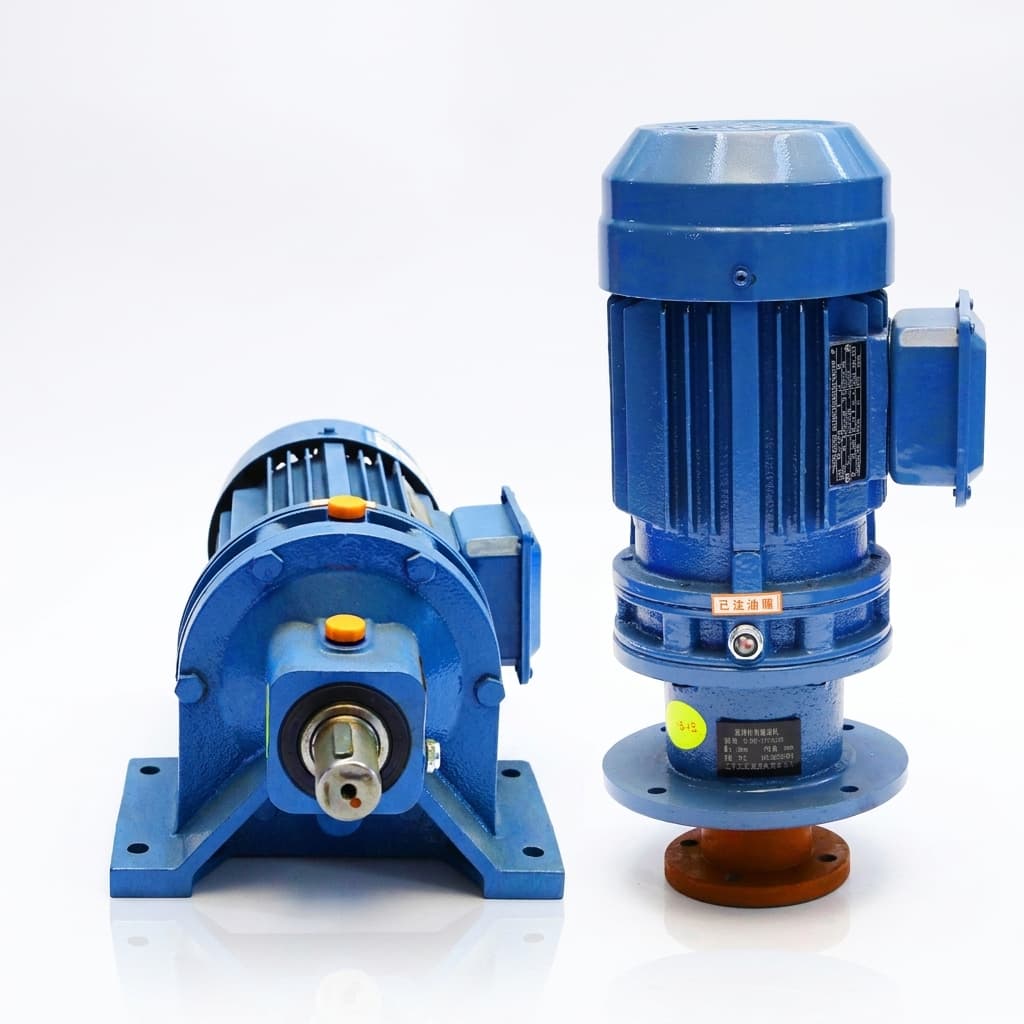
Standard planetary gear motors often feature square flanges, exposed bolt heads, and cooling fins to manage the heat generated by the electric motor and the friction of the gear stages. In a washdown environment, these features are strictly prohibited. The housing must be completely smooth and cylindrical to allow water and chemicals to drain off instantly. Bacteria cannot be allowed to hide in the threads of a mounting bolt.
Elimination of Physical Nameplates
A riveted metal nameplate creates a microscopic gap where moisture and organic material can become trapped, leading to contamination. True IP69K motors use high-contrast laser etching directly onto the stainless steel casing to display voltage, gear ratio, torque ratings, and serial numbers.
Internal Pressure Equalization (The Breather Problem)
When a planetary gear motor runs, it generates heat. The air inside the gearbox expands. When the motor is suddenly blasted with cold washdown water, the internal air rapidly cools and contracts, creating a powerful vacuum. This vacuum can literally suck water directly past the rotary shaft seals. High-end IP69K motors incorporate hygienic Gore-Tex® style breather valves or utilize complete internal potting (encapsulation) to eliminate internal air volume entirely, negating the vacuum effect.
3. The Lubrication Conundrum: NSF-H1 and Torque Limits
Planetary gearboxes are renowned for their high torque density. However, that torque density creates immense sliding friction between the sun gear, planet gears, and the internal ring gear. To prevent rapid metal-on-metal wear, standard planetary gearboxes rely on high-performance synthetic EP (Extreme Pressure) greases containing advanced additives like molybdenum disulfide (MoS₂) or PTFE.
If your gear motor is operating above a food zone, regulations (and common sense) mandate the use of NSF-H1 certified food-grade lubricants. These are lubricants approved for "incidental food contact."
The Engineering Trade-off: Historically, NSF-H1 greases (often based on white mineral oils or specific synthetic polyalphaolefins) do not possess the same extreme-pressure load-carrying capacity as their industrial counterparts. When converting a standard planetary gear motor to a washdown spec, engineers cannot simply pump out the standard grease and inject food-grade grease. The lower lubricity can cause the gearbox to overheat or wear prematurely under heavy loads.
Procurement teams must ensure that the manufacturer has officially de-rated the motor's continuous torque capacity for the H1 grease, or that the manufacturer has engineered the gear geometry to compensate for the lubricant change.
4. IP67 vs. IP69K: The Engineering Boundary Table
To help procurement and engineering teams align on specifications, the following table illustrates the structural differences between standard waterproof (IP67) planetary gear motors and true Washdown (IP69K) units.
| Specification Parameter | Standard IP67 Gear Motor | Genuine IP69K Washdown Gear Motor | Operational Impact in Food/Pharma |
|---|---|---|---|
| Housing Material | Extruded Aluminum (Painted/Anodized) | 316L Stainless Steel | Paint chipping leads to oxidation and bacterial growth; 316L prevents pitting. |
| Housing Topography | Cooling fins, exposed hex bolts, square flanges | Smooth, cylindrical, rounded edges, recessed/sealed bolts | Smooth surfaces ensure rapid fluid run-off and eliminate pathogen harborage points. |
| Rotary Shaft Seal | Single NBR (Nitrile) Lip Seal | Dual FKM/PTFE seals with protective labyrinth deflector | Withstands 100 bar pressure jets and 80°C hot water without allowing water ingress. |
| Gearbox Lubrication | Standard Industrial EP Lithium Grease | NSF-H1 Certified Food Grade Grease | Prevents toxic contamination if the output shaft seal ultimately fails. |
| Thermal Management | Relies on cooling fins and external airflow | Derated internally; relies on motor mass and mounting plate | IP69K motors run hotter; requires strict duty-cycle adherence and larger motor sizing. |
| Cable / Connector | Standard M12 connector or PVC wire | Hygienic, over-molded IP69K cable gland with PUR jacket | Prevents chemical degradation of the wire jacket and capillary water ingress. |
| Identification | Riveted aluminum nameplate or sticker | Deep laser-etching on housing | Eliminates the micro-crevices behind plates where Listeria often breeds. |
| Cost Profile (TCO) | Low initial cost; High replacement cost | High initial cost; lower replacement and contamination risk when correctly specified | In CIP environments, verified IP69K construction can justify the premium by reducing washdown-driven failures and replacement labor. |
5. The Hidden Costs: Spotting Fake IP69K Claims
The pressure to reduce capital expenditure (CapEx) often drives buyers toward cheaper "washdown ready" alternatives. These are usually standard motors coated with thick white epoxy paint.
While these might survive a few months in a light splash zone, they are a liability in a true CIP environment.
- The Thermal Trap: Epoxy paint is an excellent thermal insulator. Planetary gearboxes generate heat. By wrapping the gearbox in thick epoxy, the heat cannot escape, baking the internal windings and degrading the internal grease, leading to premature bearing failure.
- The Flaking Danger: Once a wrench slips during installation and scratches the epoxy, or the caustic washdown chemicals erode the topcoat, the underlying aluminum begins to corrode. As it corrodes, it expands, causing the surrounding paint to flake off directly into the food processing line.
- The False Seal: A vendor might use 316L stainless steel for the housing but cut corners on the output shaft seal, using standard NBR instead of specialized high-pressure FKM setups. The motor looks perfect from the outside, but floods with water within weeks.
The Total Cost of Ownership (TCO) for a cheap washdown motor can become high when you factor in the labor of repeated replacement, the cost of unplanned line downtime, and the risk of product contamination.
6. OEM Procurement & Supplier Qualification Checklist
When issuing an RFQ (Request for Quotation) for planetary gear motors for food, beverage, or pharmaceutical automation, use this rigorous checklist to audit prospective suppliers and weed out unverified claims.
- Request the Third-Party IP69K Certificate: Do not accept self-certification. Demand the test lab report identifying the exact standard edition used, such as ISO 20653:2023 or the relevant IEC/DIN EN 60529 IPx9/IP69K test basis, plus water temperature, pressure, distance, duration, flow, and spray angles.
- Verify the Stainless Steel Grade: The specification must explicitly state "316L Stainless Steel." 304 stainless is cheaper but will pit and rust over time when exposed to the chlorine commonly found in washdown chemicals.
- Audit the Lubricant BOM (Bill of Materials): Demand the exact brand and specification of the gearbox grease. Cross-reference it with the NSF White Book to verify it holds an active H1 registration.
- Check Continuous Torque Ratings: If the supplier is using H1 grease and a smooth housing (no fins), the continuous torque rating should logically be lower than an equivalently sized standard industrial motor. If the torque ratings are identical, the supplier likely has not performed accurate thermal derating.
- Review Chemical Compatibility: Provide the supplier with the exact Safety Data Sheets (SDS) of the CIP cleaning chemicals you utilize. Ask them to guarantee that the external seals (FKM, EPDM, etc.) and cable jackets are chemically compatible.
- Examine the Nameplate Design: Reject any proposal that utilizes a riveted or glued physical nameplate. Mandate laser-etched identification.
- Assess the Breather / Potting Strategy: Ask the engineering team how they handle internal pressure equalization to prevent the "vacuum effect" during rapid cooling from washdown jets.
- Verify Surface Finish (Ra): For extreme hygiene, the surface roughness of the stainless steel should be specified (e.g., Ra < 0.8 µm) to ensure bacteria cannot grip the metal.
FAQ
Can I just use an IP67 motor if we only wash down with low pressure?
If the environment is strictly a "wipe down" or low-pressure splash zone, an IP67 motor with an epoxy coating might suffice. However, if operators ever use a hose to clean the area, human error inevitably leads to direct spraying of the motor. It is generally safer to specify IP69K to remove operator error from the equation.
Why do IP69K planetary gear motors cost so much more?
The cost is driven by the raw material (316L stainless is highly expensive and difficult to machine compared to aluminum), the specialized high-pressure sealing technology, the premium NSF-H1 lubricants, and the lower production volumes compared to standard industrial automation motors.
Does the NSF-H1 grease requirement affect the gear ratio?
No, the gear ratio itself is determined by the physical teeth of the sun, planet, and ring gears. However, the efficiency of the gearbox might drop slightly, and the maximum allowable input speed (RPM) might be restricted to prevent the H1 grease from overheating.
How do we connect the motor safely in a washdown zone?
Never use a standard junction box in a washdown zone. The motor must either have a factory-sealed flying lead with a highly durable PUR (Polyurethane) jacket that is routed outside the washdown zone, or utilize a specialized, over-molded IP69K M12/M23 connector.
Sources & References
To ensure your specifications align with global automation standards, consult the following authorities on hygienic design and ingress protection:
- ISO 20653:2023 - Road vehicles - Degrees of protection (IP code) - Use this standard reference when an RFQ requires IPx9K/IP69K-style high-pressure, high-temperature ingress testing.
- EHEDG Guideline 8 - Hygienic Design Principles - A practical hygienic-design reference for equipment geometry, cleanability, and contamination-risk reduction.
- NSF White Book - Nonfood Compounds Listing Directory - Use NSF listings to verify H1 lubricant registrations and ISO 21469 lubricant certification categories.
- eCFR - 21 CFR § 178.3570, Lubricants with incidental food contact - U.S. regulatory reference for incidental food-contact lubricant substances.
Validate Your Washdown Gear Motor Specifications
Specifying a planetary gear motor for a caustic CIP environment is an exercise in risk management. A single oversight regarding housing metallurgy, seal chemistry, or lubricant certification can lead to catastrophic failure on the production floor.
If the same machine also faces chemical-compliance pressure, compare the seal and lubricant callouts against the PFAS-free planetary gear motor sourcing guide. For freezer-to-washdown duty cycles, cross-check elastomer and grease assumptions with the low-temperature AGV gear motor guide.
Don't rely on generic "washdown ready" marketing. If you are developing a new piece of food processing equipment, dosing machinery, or hygienic robotics, ensure your drivetrain is engineered for survival. Contact our engineering team today for a comprehensive washdown motor specification review, BOM audit, and custom OEM sizing.
For a direct washdown specification review, email [email protected] or WhatsApp +8618857971991 with the cleaning chemistry, wash pressure, shaft speed, torque target, and expected duty cycle.