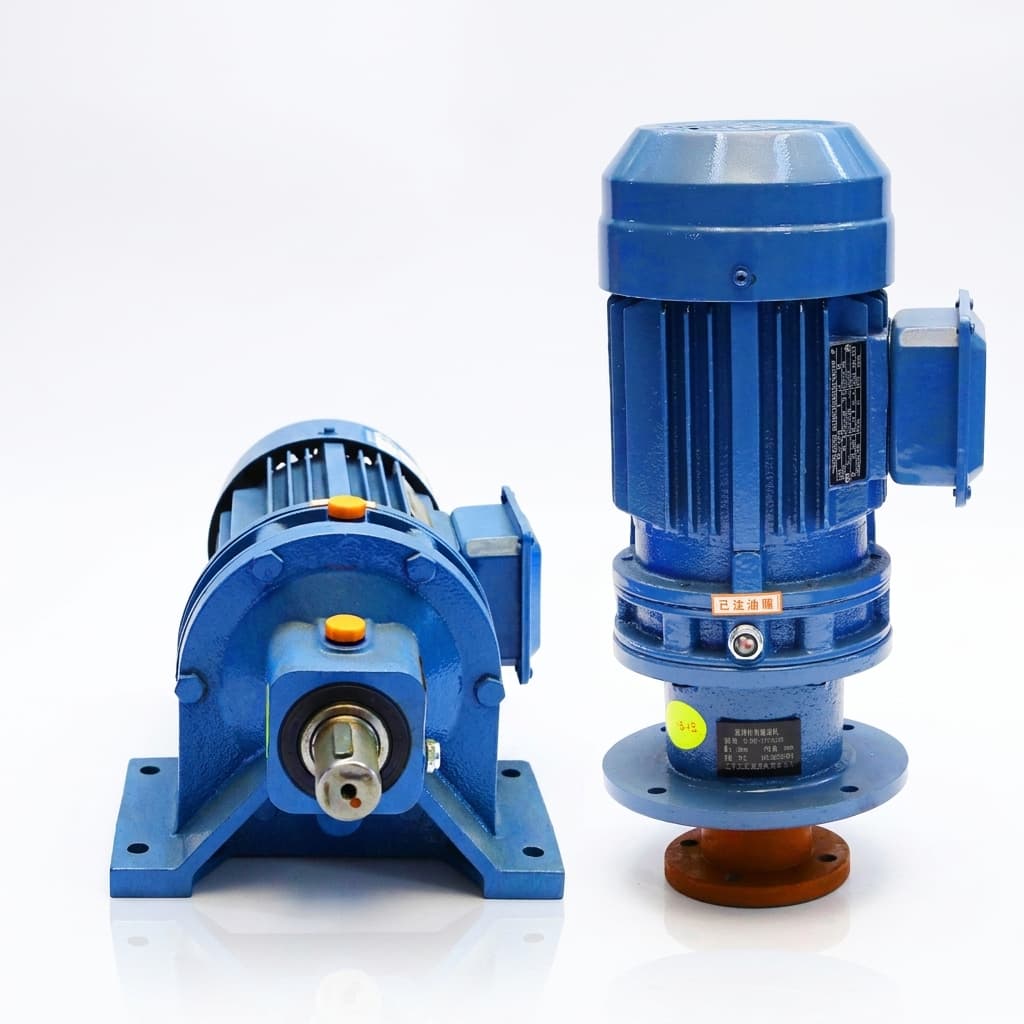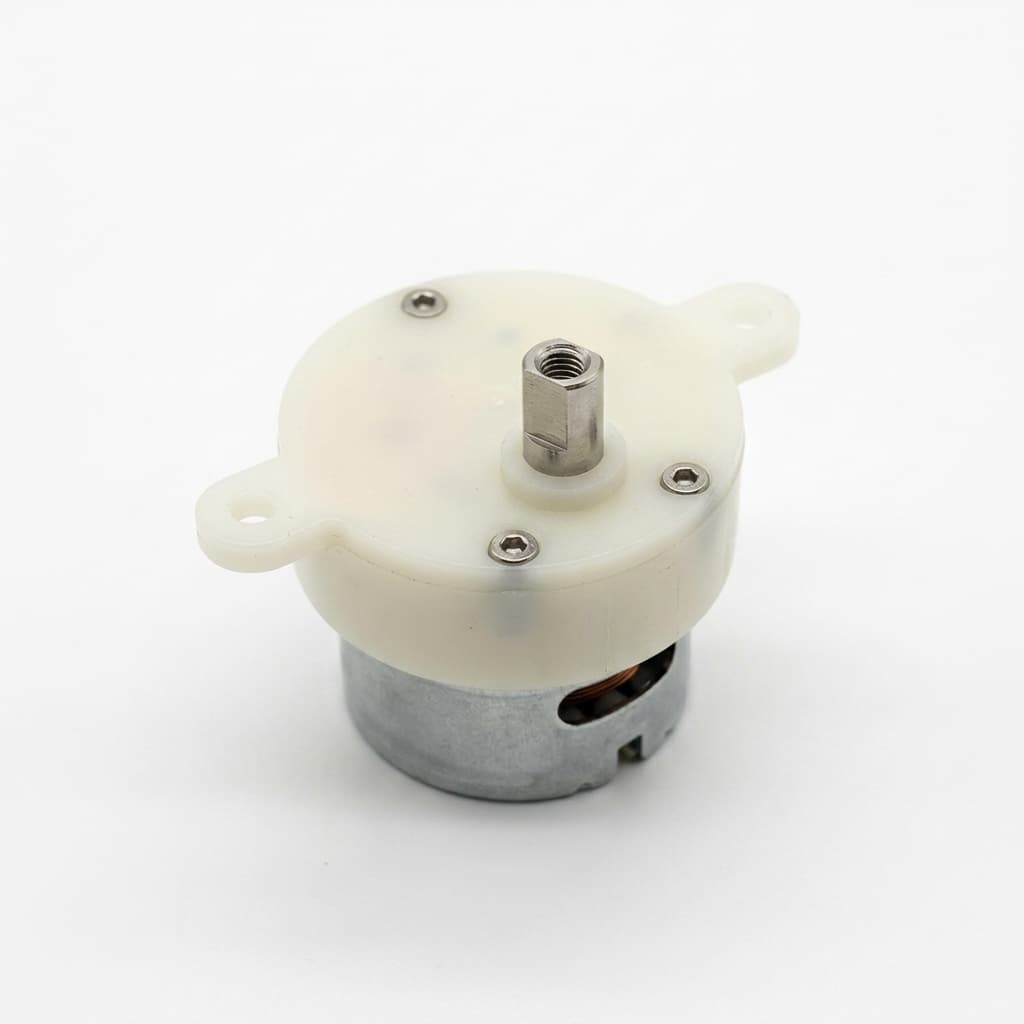
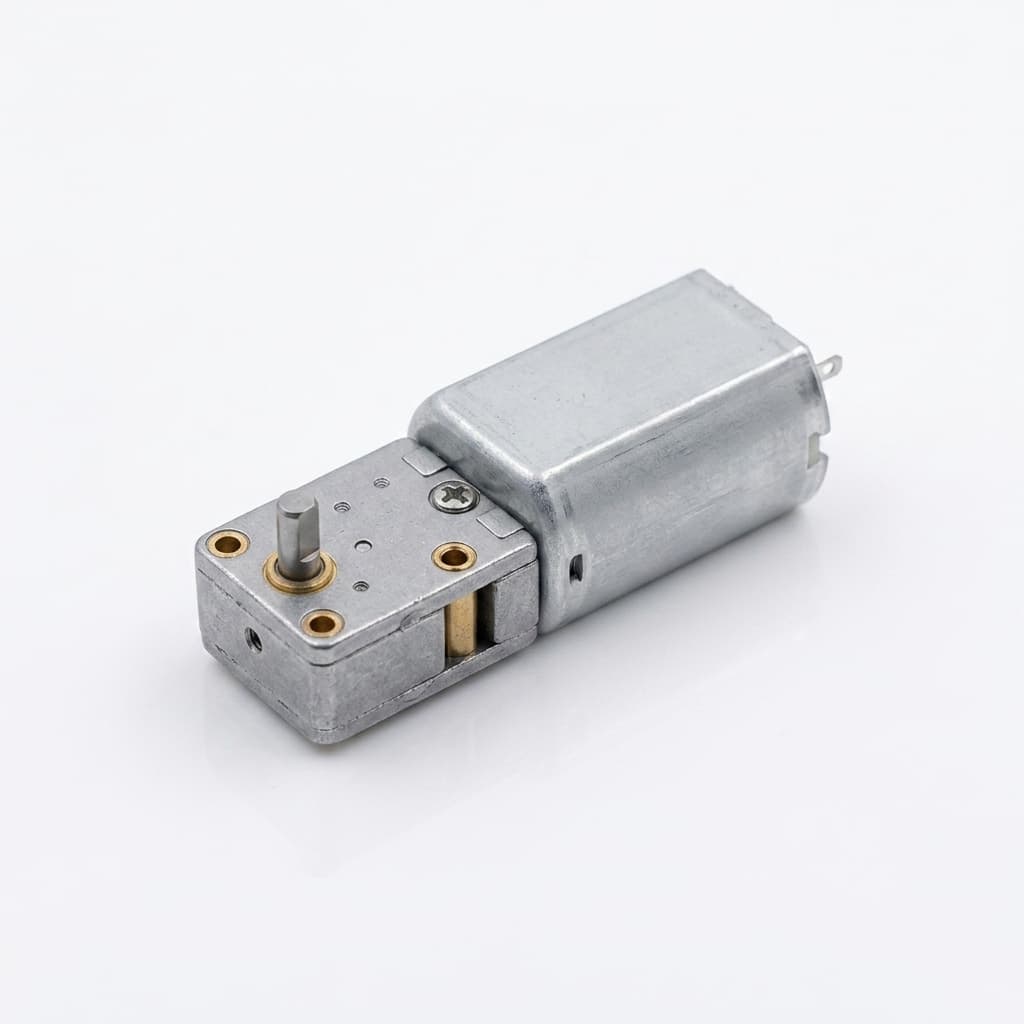
The global logistics sector is rapidly transitioning toward automated cold storage and retrieval systems (AS/RS). To maximize storage density and minimize energy loss, facilities are deploying automated guided vehicles (AGVs) and autonomous mobile robots (AMRs) directly inside deep-freeze warehouses operating at -30°C to -40°C (-22°F to -40°F).
For procurement teams and design engineers, this presents a severe mechanical challenge. A planetary gear motor designed for a standard ambient warehouse will inevitably suffer a catastrophic failure within hours of deployment in a deep-freeze environment. The root causes are rarely the gears themselves, but rather the failure of polymers, elastomers, and lubricants under extreme thermal contraction.
When standard off-the-shelf planetary gear motors are placed in ultra-low temperatures, buyers typically observe motor stall errors, blown motor drives (due to massive current draw spikes), and immediate lubricant leakage when the unit eventually warms up.
This guide provides a rigorous framework for OEM buyers and robotics engineers to specify genuine cold-rated planetary gear motors, verify supplier BOMs (Bills of Materials), and prevent costly downtime in cold chain automation.
Last reviewed: July 24, 2026. Scope: global OEM procurement and robotics engineering teams specifying sealed planetary gear motors for -30°C to -40°C cold-chain AGV/AMR duty cycles. Limitations: this guide is not a product certification, warranty, or legal/compliance opinion; confirm final lubricant, seal, cable, winding, and cold-soak test data with the supplier's TDS, BOM, and validation report before purchase approval.
If you are preparing a supplier package, start with the planetary gear motor RFQ template and send the cold-room duty cycle to our engineering team before locking the BOM. For drivetrain sizing, pair this article with the AGV gear ratio selection guide.
1. The Core Failure Modes at -40°C
Before writing an RFQ, it is critical to understand exactly what breaks inside a gear motor when the temperature plummets to -40°C.
2. Lubrication: The Viscosity Spike and Stall Torque
The most immediate cause of failure in cold-storage gear motors is improper lubrication. Standard planetary gearboxes use EP (Extreme Pressure) lithium-complex greases formulated with mineral base oils.
As the temperature drops below -20°C, the mineral oil waxes and thickens dramatically. By the time it reaches -40°C, standard grease achieves a solid, clay-like consistency. When the AGV's motor controller commands movement, the electric motor must fight against this solid block of grease just to rotate the sun gear. This massive internal resistance causes an immediate spike in current draw, which often triggers the motor controller's overcurrent protection, registering as a stall fault.
The Solution: Engineers must specify fully synthetic base oils, typically Polyalphaolefin (PAO) or synthetic esters, which have a naturally high viscosity index and an ultra-low pour point. Even with PAO, the apparent viscosity will increase at cold temperatures. You must request the supplier's starting torque data at -40°C to ensure your motor controller can handle the initial amperage spike during a cold start.
3. Sealing Elastomers: Surviving the Glass Transition Temperature
Every elastomer has a "Glass Transition Temperature" (Tg). This is the temperature at which a flexible rubber transitions into a hard, brittle, glass-like state.
Standard planetary gear motors use Nitrile Rubber (NBR) for their rotary shaft seals and static O-rings. The typical Tg for standard NBR is around -20°C to -25°C. In a -40°C warehouse, an NBR lip seal riding on the output shaft will become completely rigid. The moment the shaft rotates, the brittle lip seal shatters. While frozen, the highly viscous grease won't leak out. However, as soon as the AGV drives out of the freezer into a warmer staging area, the grease thaws, thins out, and pours out through the shattered seal, destroying the gearbox.
The Solution: For deep-freeze applications, the BOM must explicitly list low-temperature elastomers. Common upgrades include Silicone (VMQ) or specialized low-temperature grades of Fluorocarbon (FKM / Viton™). If the gearbox requires high abrasion resistance (which Silicone lacks) in addition to cold tolerance, high-performance Hydrogenated Nitrile Butadiene Rubber (HNBR) formulated for low temperatures may be required.
If your project also needs high-pressure washdown or aggressive cleaning chemistry outside the freezer, compare those seal trade-offs with the IP69K washdown planetary gear motor specification guide before freezing the shaft-seal callout.
4. Internal Condensation and Frost Build-up
When an AGV moves continuously between a -40°C freezer and a +5°C chilling dock, the temperature swings cause the air inside the gearbox to expand and contract. This "breathing" effect pulls humid external air past the shaft seals and into the gearbox. Once the AGV re-enters the freezer, that moisture condenses and instantly freezes into ice crystals on the gear teeth, accelerating wear and potentially jamming the planetary carrier.
The Solution: High-quality cold-rated planetary gearboxes must be completely sealed systems. To handle internal pressure differentials without drawing in humid air, suppliers should utilize pressure compensation membranes (such as PTFE breathers) or fully pot the electric motor stators to minimize internal air volume.
5. Engineering Baseline: Standard vs. Cold-Rated Gear Motors
When evaluating supplier proposals, use this matrix to verify if they are quoting a true cold-rated motor or just a standard catalog item with a different label.
| Component / Parameter | Standard Planetary Gear Motor | Genuine -40°C Cold-Rated Gear Motor | Operational Impact in Cold Storage |
|---|---|---|---|
| Gearbox Grease Base Oil | Mineral Oil / Standard Lithium | Synthetic PAO (Polyalphaolefin) or Ester | Mineral oil freezes solid at -40°C causing motor stalls; PAO retains fluidity for cold starts. |
| Rotary Shaft Seals | NBR (Nitrile Rubber) | Silicone (VMQ), Low-Temp FKM, or cold-rated HNBR | NBR shatters at -25°C leading to catastrophic lubricant loss upon thawing. |
| Motor Winding Insulation | Standard Class F | Class F/H with low-temp flexible varnishes | Brittle standard varnishes can crack under extreme thermal shock, causing shorts. |
| Cables and Jackets | Standard PVC | PUR (Polyurethane) or TPE | PVC shatters like glass if flexed at -40°C; PUR maintains flexibility. |
| Condensation Mitigation | None | PTFE pressure compensation breather or potted stators | Prevents humid air from being sucked in during thermal cycling, stopping internal icing. |
| Clearances & Tolerances | Standard Catalog Dimensions | Enlarged planetary carrier and bearing clearances | Metals shrink in the cold. Tighter standard tolerances can cause bearings to bind. |
6. Supplier Qualification and RFQ Checklist for Cold-Room AGV Motors
Do not accept a supplier's verbal assurance that a motor "should work fine" in a freezer. Use this checklist during your procurement process to demand engineering evidence:
- Request the Lubricant Technical Data Sheet (TDS): Verify that the specific grease listed on the BOM has an official operating range down to -40°C or lower, and check its apparent viscosity (measured via ASTM D1092 or similar) at that temperature.
- Demand Cold-Start Torque Curves: Ask the supplier for empirical testing data showing the required starting torque (and corresponding electrical current spike) after the gearbox has been cold-soaked at -40°C for 24 hours.
- Audit the Elastomer BOM: Ensure that all static O-rings and dynamic lip seals are specified as Silicone, Low-temp FKM, or low-temp HNBR.
- Verify Cable Flexibility Certifications: If the motor features flying leads or pigtail connectors, verify that the cable jacket material is rated for dynamic flexing at -40°C.
- Discuss Condensation Protocols: Ask the supplier how they prevent internal icing when the AGV transitions between ambient and deep-freeze environments multiple times a day.
If a supplier cannot return these records, pause the PO and request a low-temperature specification review before approving the sample lot.
FAQ
Can I just install an internal heater in the AGV motor compartment? While AGV designers sometimes use silicone heating pads around the battery and motor compartment, relying solely on external heat is risky. If the AGV is powered down or errors out inside the freezer, the heater stops. Once the gearbox cold-soaks to -40°C, the AGV cannot restart its motors to leave the freezer without blowing a drive. The gearbox itself must be inherently cold-rated.
Why does my standard motor work for a few weeks before failing? When the motor is running, it generates its own heat. If the AGV rarely stops, the gearbox might hover around 0°C internally. The failure occurs during the first extended maintenance stop or power outage. Once the gearbox cools to ambient freezer temperature, the seals shatter and the grease locks up on the next startup.
Are there differences in gear material for cold environments? For most -40°C applications, standard hardened alloy steels (like 20CrMnTi) are sufficient, as their strength is not severely compromised at this temperature. The primary concern is thermal contraction; the supplier may need to slightly increase the internal bearing clearances (using C3 clearance bearings) to prevent binding when the housing shrinks around the outer races.
8. Sources & References
To align your engineering specifications with industry standards for low-temperature operation, refer to the following:
- ASTM D1092 apparent viscosity overview from Savant Labs - Critical for understanding how grease stiffness is measured across low-temperature ranges.
- Grease low-temperature torque testing (ASTM D1478) from Newgate Simms - Useful companion reference for evaluating starting and running torque during cold starts.
- Parker O-Ring Material Offering Guide (ORD 5712) - Industry supplier reference for low-temperature NBR, FKM, fluorosilicone, and silicone seal material ranges.
Build Reliable Cold Chain Automation
Operating autonomous vehicles at -40°C leaves zero margin for error in your drivetrain specification. A standard catalog planetary gear motor will fail, resulting in stranded vehicles, degraded throughput, and costly manual retrieval operations inside deep-freeze environments.
When you need a drivetrain that won't lock up, shatter, or leak under extreme thermal stress, you need an engineering partner that understands the chemistry of cold. Contact our engineering team today for a comprehensive low-temperature motor specification review, cold-soak testing data, and custom OEM sourcing.
For a direct cold-room drivetrain review, email [email protected] or WhatsApp +8618857971991 with the ambient profile, cold-soak duration, motor voltage, wheel load, grease spec, seal material, and duty cycle.