
Loading...
Use this tool to screen whether 12 volt wheelchair motors belong on your replacement shortlist. It also covers singular 12 volt wheelchair motor and 12 volt electric wheelchair motor phrasing, then explains the evidence, fit boundaries, risks, and procurement path on the same canonical page.
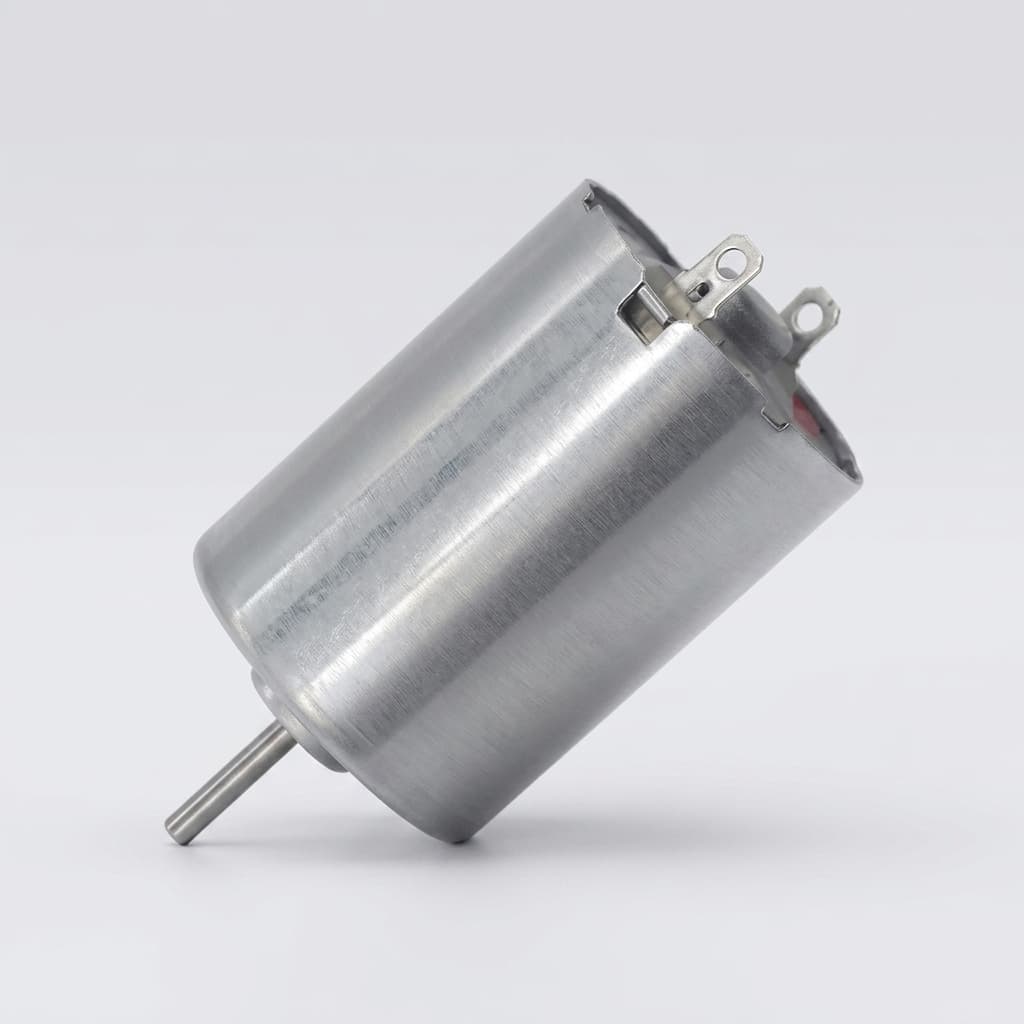
Updated 2026-06-16. Use this section to see what the report layer can prove, what it cannot prove, and which documents a buyer should collect before treating 12 volt wheelchair motor listings as a valid replacement candidate.
Added primary ISO/FDA/eCFR/Access Board/OEM/manual sources with 2026-06-16 check dates.
Added counterexamples showing battery block voltage, brake voltage, and motor voltage are separate decisions.
Published screening assumptions so buyers can replace them with OEM data.
Converted research into RFQ documents, fail signals, and minimum test records.
Send the dossier after the voltage, brake, connector, torque, and current checks are visible. A short RFQ review is the next action when the calculator is in likely-fit or engineering-watch state.
Request RFQ reviewThe checker result depends on facts that a marketplace title cannot prove. The table below turns the most common evidence gaps into purchase and validation gates.
| Gap found | Evidence added | Decision impact |
|---|---|---|
| 12 volt title interpretation | OEM battery/charger manual evidence shows two 12V batteries can support a 24V DC chair system. | Do not buy a motor from title voltage alone; confirm pack topology, controller rating, and motor nameplate. |
| Slope and torque assumption | ADA ramp guidance provides a public 1:12 / 8.33% slope reference; Dynamic installation guidance separately uses loaded ramp testing. | Treat calculator torque as a shortlist screen, then run a loaded ramp and stop/start test on the actual chair. |
| Medical release boundary | ISO 7176-14 and FDA recognition place power/control safety at the system level, not at the loose motor listing level. | A pass result can support procurement review, but not release a medical wheelchair after retrofit. |
| Brake/controller uncertainty | Controller manuals require brake engagement/release checks and programming verification after installation. | Unknown brake voltage, release current, connector map, or controller program keeps the result in watch/boundary state. |
| Calculator assumption opacity | The method table now exposes rolling resistance, drivetrain efficiency, gear efficiency, and the assumed motor no-load speed used by the tool. | Users can replace screening assumptions with OEM data instead of treating the score as a certified rating. |
| Legacy controller evidence | Dynamic Controls identifies DX/DX2 as legacy support content, while its manual still illustrates brake-delay and ramp-test risks. | Use controller manuals to define required checks, but do not copy legacy wiring patterns into a new design without the exact controller documentation. |
| Battery standard boundary | ISO and FDA entries now separate lead-acid battery/charger evidence from lithium-ion battery-system evidence. | Ask the supplier to identify battery chemistry and charger standard evidence separately from the motor nameplate and controller fit. |
The tool is deterministic for the same inputs, but it is still a screening model. Replace these assumptions with supplier or test data whenever you have it.
| Assumption | Current value / method | Why it is used | Best replacement |
|---|---|---|---|
| Grade load | grade force = total mass x 9.81 x grade percent | Makes ramp demand visible from user-entered chair mass, rider mass, and worst-case grade. | Measured drawbar force or validated platform test data. |
| Rolling resistance | 0.025 coefficient | Conservative screening placeholder for tires, bearings, and indoor/outdoor surface variation. | Measured tire/surface rolling resistance for the actual chair. |
| Drivetrain efficiency | 0.72 wheel-demand divisor; 0.78 gearbox output multiplier | Keeps the calculator from assuming ideal gearbox, tire, and drivetrain transfer. | Supplier efficiency curve or dyno data at the operating torque/speed point. |
| Motor speed proxy | 3200 rpm before gearbox reduction | Provides only a speed-screening estimate when listing data does not include a speed curve. | Motor no-load and rated-speed data from the exact nameplate/datasheet. |
| Margin rule | Pass requires at least 25% torque margin and 20% current margin | Buffers uncertainty in payload, slope, duty cycle, tire condition, and documentation quality. | Validated thermal/current limits from the chair controller and motor test report. |
These are the cases most likely to turn a cheap 12V listing into the wrong wheelchair motor shortlist.
| Assumption to reject | Observed counterexample | Decision rule |
|---|---|---|
| Two 12V batteries mean the drive motors are 12V. | Pride owner documentation shows two 12V batteries while the charger path is 24V DC. | Separate battery block voltage from system bus voltage and motor nameplate voltage. |
| A 12V park brake proves the motor itself is 12V. | Dynamic Controls material includes 12V park-brake configurations inside a 24V control context. | Treat brake voltage, motor winding voltage, and controller output as separate RFQ fields. |
| A chair that moves on flat floor is validated for ramps. | Dynamic testing guidance includes ramp acceleration, rollback, parking, and repeated control checks. | Require loaded ramp launch, stop/start, rollback, brake, and thermal checks before release. |
| A generic 12V wheelchair motor listing is enough for medical use. | FDA/eCFR classify powered wheelchairs as Class II medical devices; ISO/RESNA standards operate at system level. | Use the listing only as shortlist input; keep final evidence at wheelchair-system level. |
| Lead-acid battery evidence can be copied to lithium-ion packs. | ISO 7176-25:2022 addresses lead-acid batteries and chargers, while ISO 7176-31:2023 separately covers lithium-ion battery systems and charging systems. | Keep battery chemistry, charger limits, BMS evidence, and motor voltage as separate review fields. |
The extra battery research closes a common decision gap: a chair can document 12V battery blocks while the motor, brake, controller, and charger evidence still belong to different validation lanes.
| Evidence lane | Primary public source | Date marker | How to use it |
|---|---|---|---|
| Lead-acid battery and charger lane | ISO 7176-25:2022; FDA recognition 16-235 | ISO published 2022-10; FDA recognized 2023-05-29; amendment 1 published 2025-05 | Use for lead-acid battery and charger requirements, not as proof that a drive motor is 12V. |
| Lithium-ion battery-system lane | ISO 7176-31:2023; FDA recognition 16-241 | ISO published 2023-05; FDA recognized and page updated 2026-05-25 | Use for lithium-ion battery systems and charging systems, especially when a retrofit changes chemistry or battery architecture. |
| Power/control lane | ISO 7176-14:2022; FDA recognition 16-234 | ISO published 2022-03; FDA recognized 2023-05-29; amendment 1 published 2025 | Use to keep controller, control forces, failure behavior, and powered wheelchair speed scope at system level. |
| OEM example lane | Pride Jazzy Air 2 specification and owner documentation | Specification document rev C February 2022; checked 2026-06-16 | Use as a concrete counterexample: two 12V batteries and a two-motor drive still require system-level voltage confirmation. |
These sources explain why the page prioritizes voltage, torque, current, brake, and documentation gates instead of publishing a separate alias URL.
| Source | Date / scope | Used for | Confidence |
|---|---|---|---|
| ISO 7176-14:2022 public page | Published 2022-03; edition 3; checked 2026-06-16 | Sets the power/control system boundary, including safety and performance requirements and test methods for electrically powered wheelchairs and scooters. | Primary standard source |
| ISO 7176-14:2022/Amd 1:2025 | Published 2025-03; checked 2026-06-16 | Confirms the 2025 amendment exists; public abstract says it corrects a referred standard rather than publishing new open motor-fit data. | Primary amendment metadata |
| FDA recognized consensus standard entry for ISO 7176-14 | FR recognition entry 2023-05-29; checked 2026-06-16 | Recognizes ISO 7176-14 for medical devices and links powered wheelchairs to 21 CFR 890.3860 class II context. | Primary regulatory source |
| eCFR 21 CFR 890.3860 | Current eCFR view checked 2026-06-16 | Identifies a powered wheelchair as a battery-operated medical-purpose mobility device and classifies it as Class II. | Primary legal/regulatory source |
| U.S. Access Board ADA ramp guide | Checked 2026-06-16 | Defines the public-access slope reference used to explain why grade input changes torque demand; 1:12 equals 8.33%. | Government accessibility guidance |
| Pride Jazzy Air Series owner manual | Manual checked 2026-06-16 | Shows a real power chair using two 12V sealed deep-cycle batteries and a charger converting AC to 24V DC. | OEM owner manual |
| Pride Jazzy Air 2 public specification page | Page checked 2026-06-16 | Provides a concrete OEM example listing two required 12 volt U-1 batteries; useful as battery/system context, not a universal motor rule. | OEM product specification |
| RESNA wheelchair standards overview | Page checked 2026-06-16 | Shows powered wheelchair standards cover dynamic stability, brake effectiveness, energy consumption, speed, obstacle climbing, climatic testing, power/control systems, EMC, batteries, and chargers. | Assistive technology standards body |
| ISO 7176-25:2022 public page | Published 2022-10; amendment 1 published 2025-05; checked 2026-06-16 | Defines lead-acid battery and charger requirements for electrically powered wheelchairs and scooters; public abstract limits charger scope to rated input not greater than 250 V AC and nominal output not greater than 36 V. | Primary standard source |
| FDA recognized consensus standard entry for ISO 7176-25 | FR recognition entry 2023-05-29; checked 2026-06-16 | Recognizes the 2022 lead-acid batteries and chargers standard for powered wheelchair, powered mobility, and related Class II device contexts. | Primary regulatory source |
| ISO 7176-31:2023 public page | Published 2023-05; checked 2026-06-16 | Defines requirements and test methods for lithium-ion batteries, battery systems, and charging systems intended for electrically powered wheelchairs. | Primary standard source |
| FDA recognized consensus standard entry for ISO 7176-31 | FR recognition entry 2026-05-25; page last updated 2026-05-25; checked 2026-06-16 | Recognizes ISO 7176-31:2023 as complete for lithium-ion battery systems and chargers, reinforcing that lithium battery evidence is a separate validation lane. | Primary regulatory source |
| Pride Jazzy Air 2 specification document | Document rev C February 2022; checked 2026-06-16 | Lists two 12-volt sealed lead-acid U-1 batteries, two-motor mid-wheel drive, disc park brake, 6 degree maximum rated slope, and range testing references. | OEM specification document |
| OpenSpec alias triage for this page | Implemented 2026-06-16 | Records the site decision to merge exact 12 volt wheelchair motors demand into the wheelchair motor canonical URL instead of creating a duplicate route. | Internal routing and content-governance decision |
| Dynamic Controls DX System manual | Manual issue October 2007; checked 2026-06-16 | Shows why controller programming, park-brake configuration, brake engagement, wheel-off-ground checks, and ramp testing are validation gates beyond motor label fit. | Controller manufacturer manual |
| Dynamic Controls DX / DX2 support page | Page checked 2026-06-16 | Marks DX/DX2 as legacy support content and not for new designs, limiting how far its wiring examples can be generalized. | Controller manufacturer support notice |
Public reference points include ISO 7176-14:2022 for power and control systems of electrically powered wheelchairs and scooters, FDA recognition metadata, eCFR device classification, ADA ramp slope guidance, RESNA standards context, and OEM/manual examples. Exact motor wattage, brake, connector, encoder, controller firmware, and thermal limits remain model-specific.
| Gate | Public anchor | Pass evidence | Fail signal |
|---|---|---|---|
| Voltage chain | Pride manual shows two 12V batteries and 24V DC charging. | Battery topology, controller voltage, brake voltage, and motor nameplate all agree. | Only the marketplace title says 12V. |
| Ramp torque | Access Board guide frames 1:12 / 8.33% as a public ramp maximum. | Loaded ramp launch and stop/start test pass with thermal headroom. | Motor only spins freely on the bench. |
| Brake release | Dynamic installation guidance checks brake engagement, release click, and re-engagement. | Brake voltage, release current, connector pins, and controller fault behavior are verified. | Motor body fits but brake wires are undocumented. |
| Regulated use | FDA/eCFR identify powered wheelchairs as Class II medical devices. | System-level verification records exist for the intended chair and user context. | A supplier quote is treated as clinical release evidence. |
| Battery and charger lane | ISO 7176-25 covers lead-acid batteries/chargers; ISO 7176-31 covers lithium-ion battery systems/chargers. | Battery chemistry, charger output, BMS or lead-acid documentation, controller voltage, and motor nameplate are all aligned. | Lead-acid or lithium-ion battery evidence is used as a shortcut for motor voltage fit. |
If the seller cannot provide these records, the safest page result is not "fail forever"; it is "not enough evidence to buy or energize."
| Document | Must show | If missing |
|---|---|---|
| Motor nameplate and datasheet | Rated voltage, rated torque, speed curve, current limits, duty rating | Do not use marketplace title data as the electrical specification. |
| Controller manual or programming file | Voltage range, peak/current limits, motor continuity tests, brake settings, fault behavior | Keep result in engineering watch until controller behavior is known. |
| Brake and feedback map | Brake voltage/current, release timing, connector pins, encoder or Hall interface if present | Do not energize the assembly; mismatched brakes can create rollaway or lockout risk. |
| Mechanical drawing | Shaft, keyway, mount pattern, gearbox output, cable exit, wheel interface | Treat as fit unknown even if voltage and torque look acceptable. |
| Loaded test record | Ramp launch, reverse/rollback, repeated stop/start, temperature, brake re-engagement | Use only as procurement shortlist; do not release a modified chair. |
Send voltage, controller, brake, wheel, load, and duty-cycle details. Use the anchor phrase 12 volt wheelchair motors when linking internally to this canonical page.